Leave Your Message
Contemporary architecture and design give primary importance to integration with new types of material that create useful, beautiful spaces. One such material gaining considerable attention is Led Glass, able to not only augment the attractiveness of an area but integrates state-of-the-art technology to make it more energy-efficient and user-friendly. In a recent report released by MarketsandMarkets, the global smart glass market, including Led Glass, is projected to rise to USD 10.71 billion by 2025, reflecting an incredible CAGR of 11.5% from 2020 to 2025, indicating the growing demand for innovative materials such as Led Glass in contemporary architecture solutions.
Meanwhile, Dongguan Fuxin Glass Technology Co., Ltd. has, for over a decade, been the leading company in glass innovations. We research and develop different series of professional glass applications, and our strong focus is on display glass application development that includes ag glass, ar glass, af glass, and am glass. The thorough investigation of Led Glass, by creating opportunities for interaction between light, environment, and modern building structures, raises the standards for functionality and visual impact in modern architecture and design.
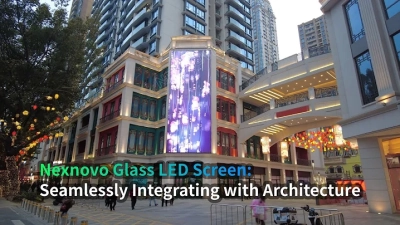
With remarkable versatility across a wide variety of applications, LED glass is changing the face of modern architecture and design. LED glass is the new glass that combines LED technology with glass panel; in this sense, it brings a dynamic interaction between light and structure. Facades of increasing numbers of buildings are being lined with LED glass by architects, allowing the building to become a vibrant skin for dazzling displays and graphics that change through the day. Such applications not only enhance the aesthetic appeal of the structure, but they also serve as an energy-efficient solution, using programmable light patterns for reducing the necessity of external light. Besides that, LED glass is widely employed as a functional design element in both residential and commercial settings. For example, LED glass would be used for Smart homes in walls that define spaces but can also operate as interactive displays for information, ambiance, or artistic expression. LED glass was extensively used in venues during the Winter Olympics, creating an amalgamation of technology and architectural artistry that provided the audience with immersive experiences. This marked another innovative application that substantiates the role of LED glass as the very future in modern architecture by pushing the borders and questioning traditional methods of design. While discussing architectural versatility, the light draws on more urban potential for LED glass to redefine the very landscape involved. By combining aesthetics and technology, it gives opportunity for architects to start playing with enhancing the architectural narrative and nurturing sustainable practice. In the age of smart buildings, LED glass surely represents innovation-a link between functionalism and art-and will thus set a benchmark for the future of design.
Today, LED glass is one of the best choices available for modern architecture and makes light-active functional art out of facades. This is unlike the static traditional materials that would have previously served, where LED glass provides the architect with a canvas, not just for the glowing luminescence but, even more, a very immersive visual experience. Incorporating light-emitting diodes into glass panels enables buildings to evoke stunning light patterns, bright colors, and intricate designs that change as the time of day or occasion progresses. The approach literally breathes life into static structures and allows designers to express themselves differently.
However, LED glass can aesthetically add to building image structures and, at once, serve a dual purpose as sustainable. Precisely, by controlling brightness and color temperature, it does allow for facades to have a response to environmental conditions thereby reducing energy consumption for climatic conditioning in a building. At some instance when these facades would collect daylight, they would have deliberate need for artificial lighting. At nighttime, they could light up their surroundings with interesting shows on stage, making them art pieces, turning the building into a creative beacon.
LED glass adds to the building's versatility by seamlessly tying itself with other design elements, such as landscaping and urban infrastructure. It beckons interaction between passersby while creating a sort of community by serving as a focal point or gathering place. If cities become built-in this way, LED glass may redefine limits of architecture. Buildings will no longer be mere structures but will be woven into the very fabric of urban narratives that invite participants and inspire boldness.
With the application of LED glass within modern architecture, the concept of daylight design is literally being turned upside down, especially concerning spaces where daylight is a constant struggle. Traditionally, one would increase illumination by putting in larger windows or skylights into the building. However, this is not always the best solution for all buildings, and LED glass provides a far more practical opportunity to allow architects to fabricate daylight even in the most illusory of spaces, however confined or windowless. By using tunable white LED sources behind glass blocks, designers can simulate the appearance and qualities of natural sunlight, thus encouraging a well-lit, warm environment without giving complete reliance on daylighting.
Designing for daylighting plays an important role in augmenting health and wellbeing of the occupants, with research showing that presence of sunlight enhances mood and productivity, both of which rates highly in every type of residential and commercial activity. Since people spend a good portion of their lives indoors, strategic use of LED glass can help alleviate situations when natural lighting is deficient. By taking advantage of superior LED technologies, architects can provide stimulating indoor lighting schemes that render lighting not only as illumination but also as a variable architecture that mimics the natural rhythm of daylighting-enhancing comfort from a psychological perspective of the occupants.
Additionally, with energy efficiency and sustainability being further emphasized in architectural practices, a good approach to daylighting is gaining more importance. Some studies state that nearly 20% of the global electricity consumption goes for lighting; thus, high-performance facades are very important. By providing the possibility of using LED glass in architectural design, the minimum lighting requirements can be maintained while energy consumption is reduced in line with a more global commitment to sustainable building practices. The joining of aesthetics and functionality within this scenario would prove LED glass as a very relevant factor working within the framework of an architectural design today.
The implementation of LED glass technology in modern architecture represents a substantial enhancement in building functionalities and interactions. Smart buildings today have become equipped with contemporary features that aid the lighting of interiors, energy efficiency of structures, and aesthetic appeal. LED glass allows more control over lighting and environmental conditions, thereby culminating in a more sustainable and user-friendly experience.
Smart buildings with LED glass enable dynamic surfaces that adapt depending on environmental conditions. For instance, variations in LED glass transparency can occur in sync with external lighting levels so that artificial light usage during the day can be decreased. This not only saves energy but also ensures a reduced building carbon footprint. You can then imagine designers using this technology to make very impressive facades whose colors change every hour or so, interrupting the daily monotony of criminal façade that changes with outdoor light levels while providing some really useful benefits.
LED glass interfaces well with smart home systems, where it can be controlled by the homeowner's smartphone or by voice-activated devices. It introduces automation into the design fold that personalize the space in an enticing fashion, making homes not only aesthetically pleasing but more personal to the lifestyles of their inhabitants. The continued imagination of architects toward new applications of LED glass seems limitless, leading one to believe that in the future, buildings would become something more than mere structures and evolve into receptive organisms that seamlessly interface with technology and nature.
Therefore the LED glass is making the difference into the space experience that is flat tools with interactive landscapes. A report, as cited by MarketsandMarkets, states that the global LED-lighting market is predicted to hit $105.5 billion in 2025, one of which is a huge segment for architectural lighting solutions matched by LED technology. Energy efficiency with aesthetically pleasing enhancements is indeed a trigger for adoption, making LED glass a contemporary feature for modernistic homes.
Light glass feature allows for the construction of enveloping forays which catch visitor experience on several sensory fronts. Thus, for instance, in hospitality or retail, you can use LED glass to create really interesting experiences that react to customers moving in or doing something with the space. The American Society of Interior Designers notes that lighting is one of the major influences on human emotions and behaviors, and it shows the strategic importance in using LED glass in designing mood-enhancing spaces.
Wonderful enough, the usability of glass extends beyond that limited application. Programmable glass under the control of micro controllers may change colors or patterns in real-time. For example, according to the time or certain occasion, it will change color patterns. The latest upscale applications in luxury hotels and trendy restaurants indicate that this type of technology can also increase dwell time and customer satisfaction, resulting in higher revenues. With the continued evolution of the industry, so is the promise of enhancing the visual experience with LED glass interiors for sustainable design practices.
Modern architecture is adorned by the rise of led glass and this talks a lot about how far we have come as architects in the manner of designing our future sustainably. An added extra is a very aesthetic enhancement as pertaining to some of the advantages environmentally. According to the U.S. Department of Energy report regarding buildings claiming about 40% of total energy consumption; and because lighting takes a huge share of this, led glass would help architects and designers cut down energy use drastically-from traditional ways of lighting to led lighting with as high as 75% reduction in energy consumption.
In addition, even led glass is essential for thermal insulation to cut down heating and cooling costs in buildings. A study was conducted at Lawrence Berkeley National Laboratory to verify that windows along with LED technology provide essential improvements for energy efficiency in artificial lighting needs, diameter, reduced heavy usage in daylight hours. This means savings in electricity bills and makes a significant contribution to countries with concerted efforts to lower carbon footprints like many others; thus, led glass appears not only attractive for builders concerned with the environment.
Aside from energy-saving, it must also contribute to better well-being to people in a building-high lighting within space would improve productivity and moods according to surveys done by the World Green Building Council. Combining future-oriented designs and energy-saving features, this led glass is so much in keeping with the aesthetics of modern architecture, and still very much in line with being a vital material of sustainable construction for the future.
In fact, their impact on modern architecture and designing would significantly affect integration of LED glass into future building projects. The Architectural Glass Association points out that the total market for LED glass will reach $4.6 billion by the year 2025. Such growth in demand will result from the emerging necessity for design and energy efficiency solutions. Thus, this throws light on the fact that architects and designers increasingly tend to personalize their spaces with respect to functionality but much more towards very distinctive sensory experiences.
Among the customizable features for LED glass are dynamic lighting effects and the addition of interactivity. A report of the National Institute of Standards and Technology states that the adoption of LED technology can lead to energy savings on lighting as much as 75 percent. Therefore, designers can afford to take larger measures and experiment with complicated installations without consequence of rising energy costs. The control over brightness, coloration and movement of the LED glass acts like a blank canvas for the artists to fill with ever-new forms of expression making every exhibition piece unique.
Pragmatically as the above, LED glass might also be fitted in a way to heighten moods in spaces. For example, patients in hospitals with partitions made of LED glass report reduced recovery times, suggesting that psychiatric evidence indicates that attractive spaces might be helpful for recovery. Thus matching the technical aspects to those of art would provide a tailor fit into individual environments using LED glass to create conditions for health, involvement, and connectedness, which turn the mundane into the spectacular.
The future of LED glass used in architecture and design technology is looking at being completely transformed with the advance in technology and growing needs toward sustainable solutions. As such, architects and designers seek inventive ways to implement lighting as part of their projects; so, LED glass enters as a versatile medium redefining traditional barriers. New designs will probably incorporate smart glass systems that do not only light up spaces, but also respond to environmental stimuli during the day, allowing for natural daylight, whereas different lighting options will be offered at night.
Excitingly, another horizon to look out for is the interaction of LED glass with augmented reality (AR) to ensure immersive experiences in public and commercial environments. Just picture walking into a store where the displays interact in real-time with animated graphics that attract customers. As AR progresses, opportunities for the design of interactive environments abound, allowing for rich possibilities of combining the physical and the digital. This can lay the ground for possibilities of design that are personalized and reactive, attracting users in truly different ways.
Also, sustainability will influence LED glass's future. As architecture materials become more environmentally friendly on the global stage, manufacturers now look forward to creating energy-efficient LED glass fabricated in a way that reduces energy consumption and enhances outlook. There seem to be attempts to marry biophilic principles of design so that LED glass can help pull the outside in, thereby calming and nurturing the innards of a given space. With all these trends taking root, LED glass will positively flourish in contemporary architecture that will suit society's ever-evolving needs and whims.
LED glass is a material that integrates LED technology into glass panels, allowing for dynamic light displays and graphics. Architects use it in facades and interiors, enhancing aesthetic appeal and energy efficiency.
LED glass allows for programmable light patterns that reduce the need for external lighting. It can control brightness and color temperature, enabling buildings to harness natural light during the day and illuminate creatively at night, minimizing energy consumption.
LED glass can showcase stunning light patterns, vibrant colors, and intricate designs that change with the time of day or occasion, thus transforming static structures into dynamic visual experiences.
LED glass is versatile and can be used in both residential and commercial spaces, including smart homes, where it can serve as partitions or interactive displays.
LED glass serves as a focal point, inviting interaction and creating gathering spaces. Its dynamic aesthetic can reshape urban landscapes, making buildings integral parts of community narratives.
Customization options for LED glass include dynamic lighting effects, interactive elements, and the ability to control brightness, color, and motion, allowing for one-of-a-kind design experiences.
Hospitals using LED glass have reported improved patient recovery times, as aesthetically pleasing environments can positively influence mental health and enhance the overall emotional impact of the space.
The market for LED glass is projected to reach $4.6 billion by 2025, highlighting the increasing demand for innovative, energy-efficient design solutions that prioritize both functionality and aesthetic experience.
LED glass was prominently featured to illuminate venues, blending technology with architectural beauty and creating immersive experiences for audiences, showcasing its potential in modern architecture.
With its ability to fuse aesthetics and technology, LED glass encourages architects to experiment with light and design, creating innovative structures that challenge traditional architectural notions and promote sustainability.